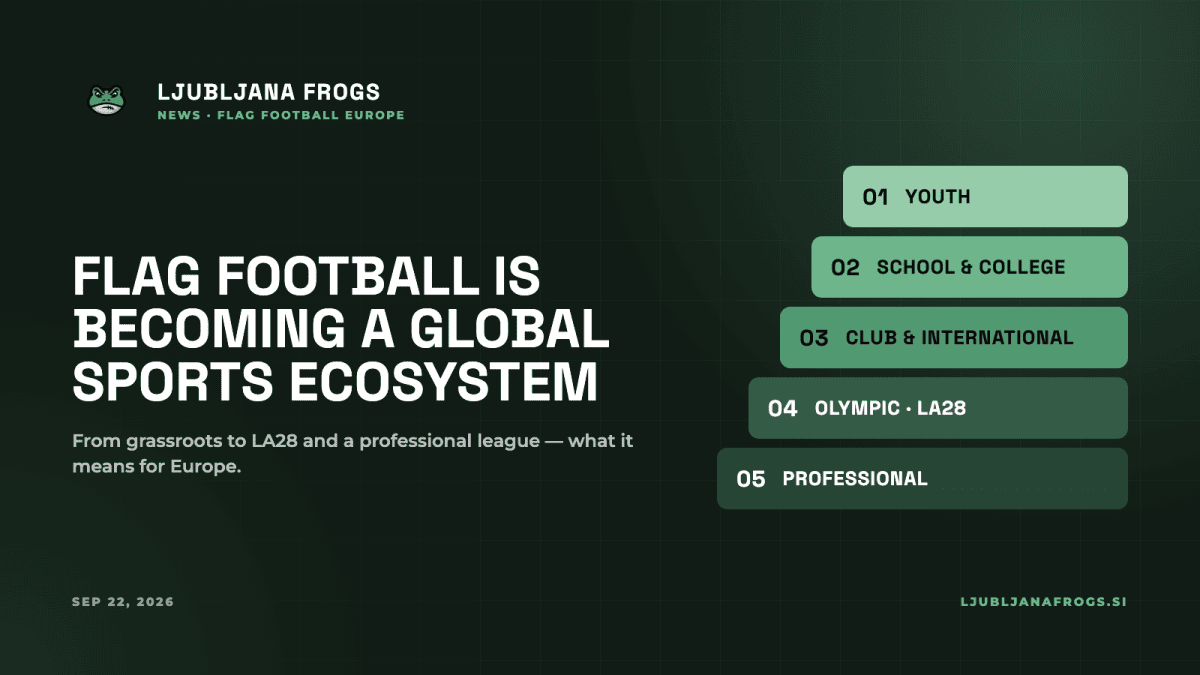
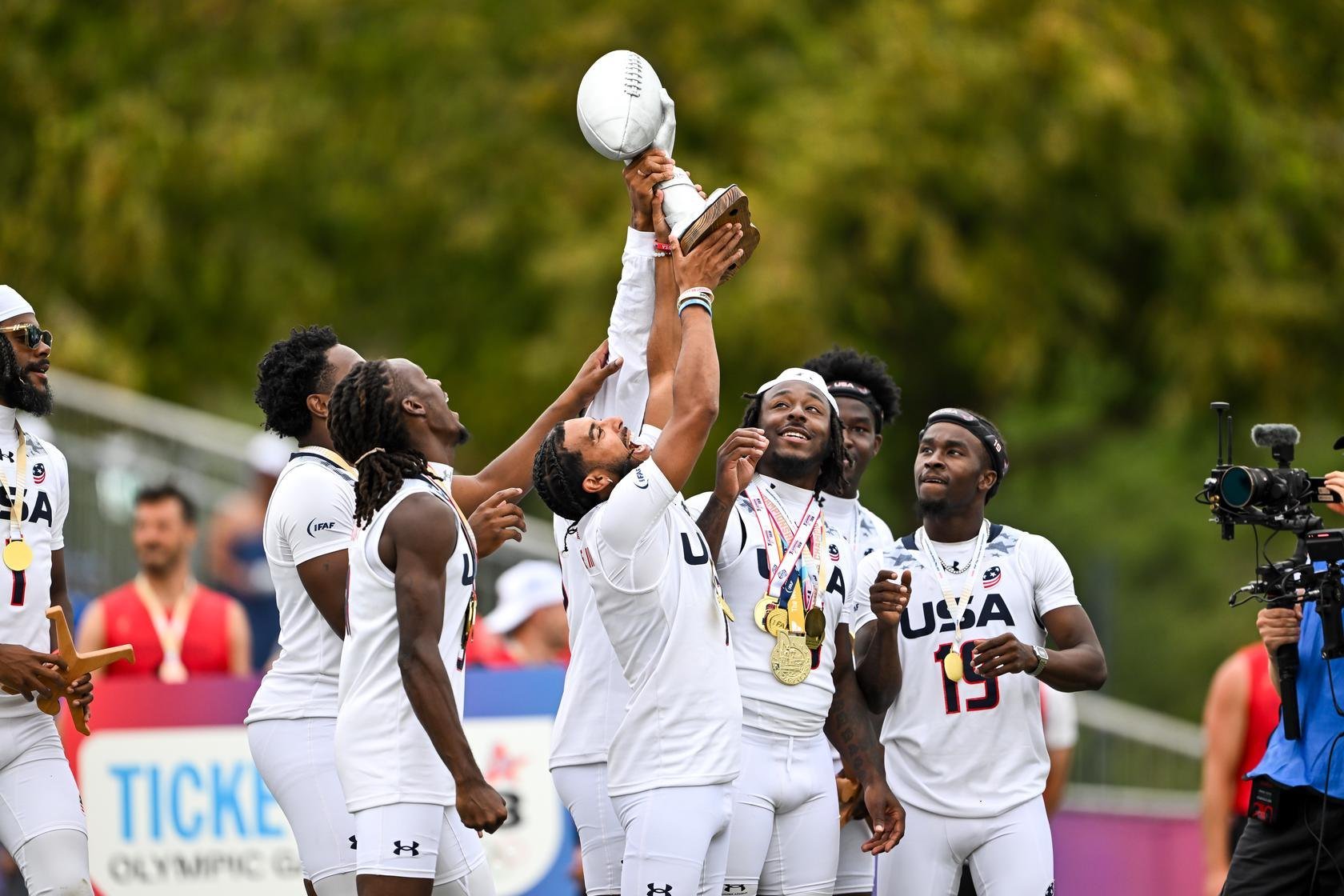
The 2026 World Championship is over.
And what a tournament it was.
We saw elite flag football in both categories, three of the six first Olympic tickets punched, and a tournament that showed just how quickly this game is evolving.
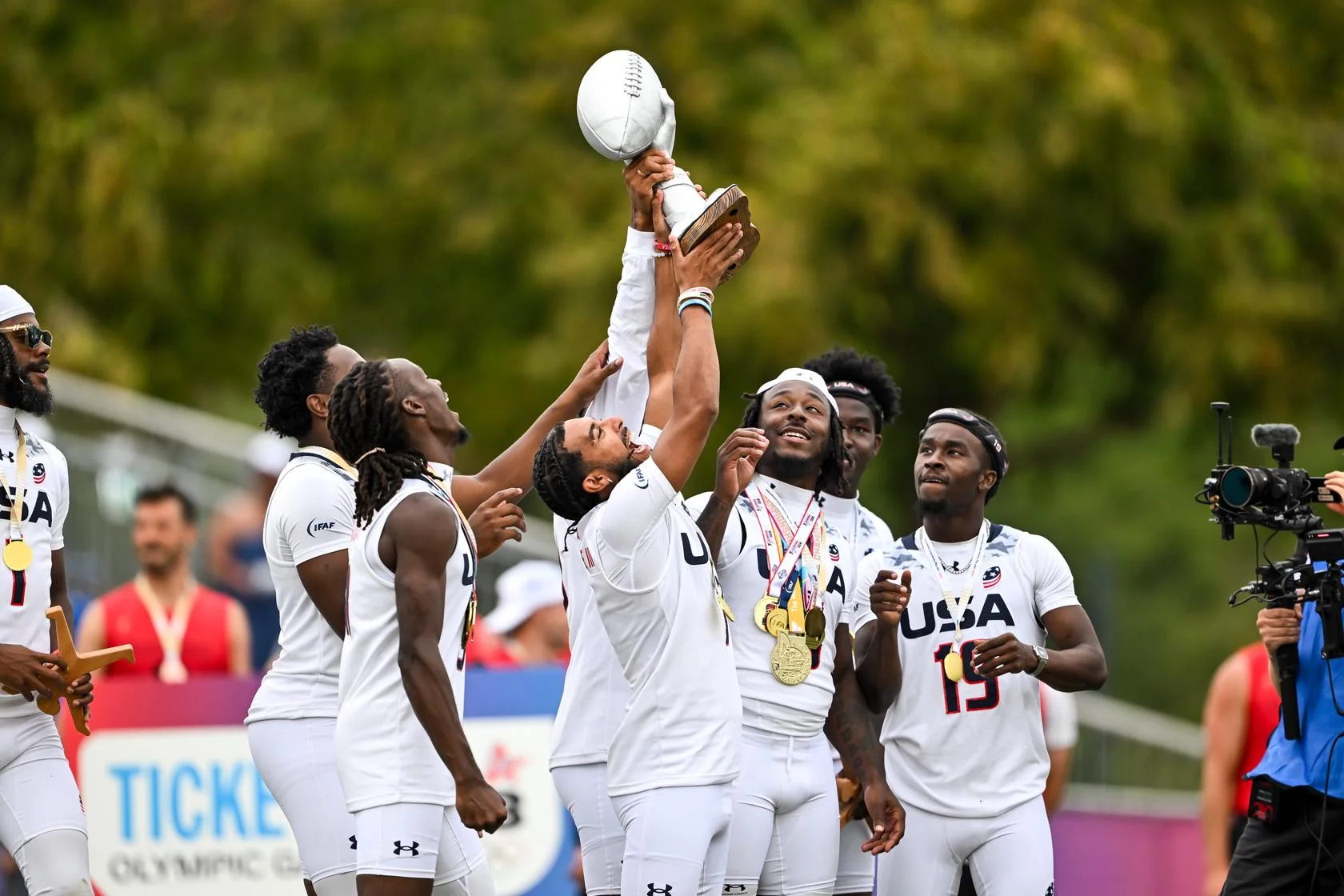
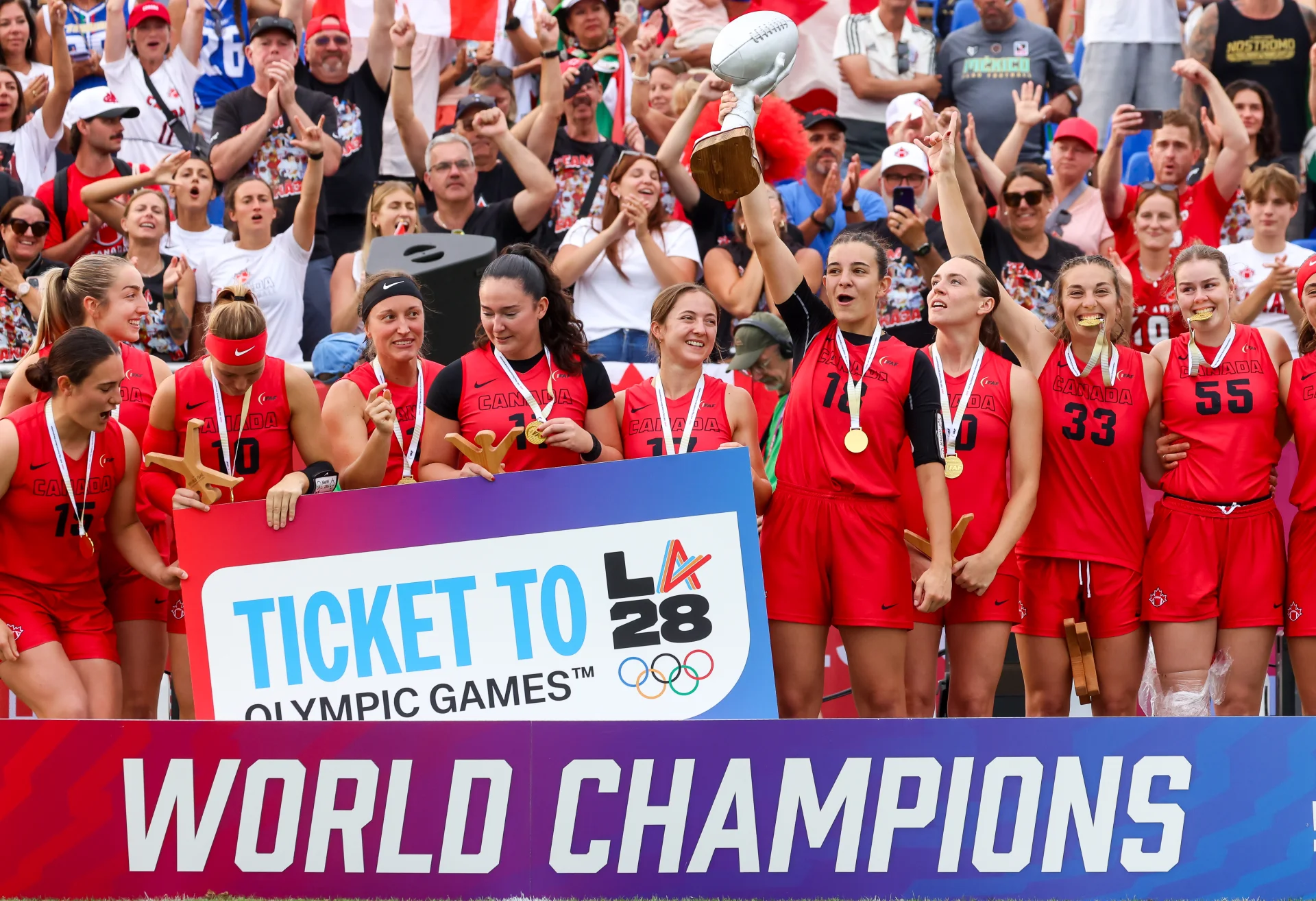
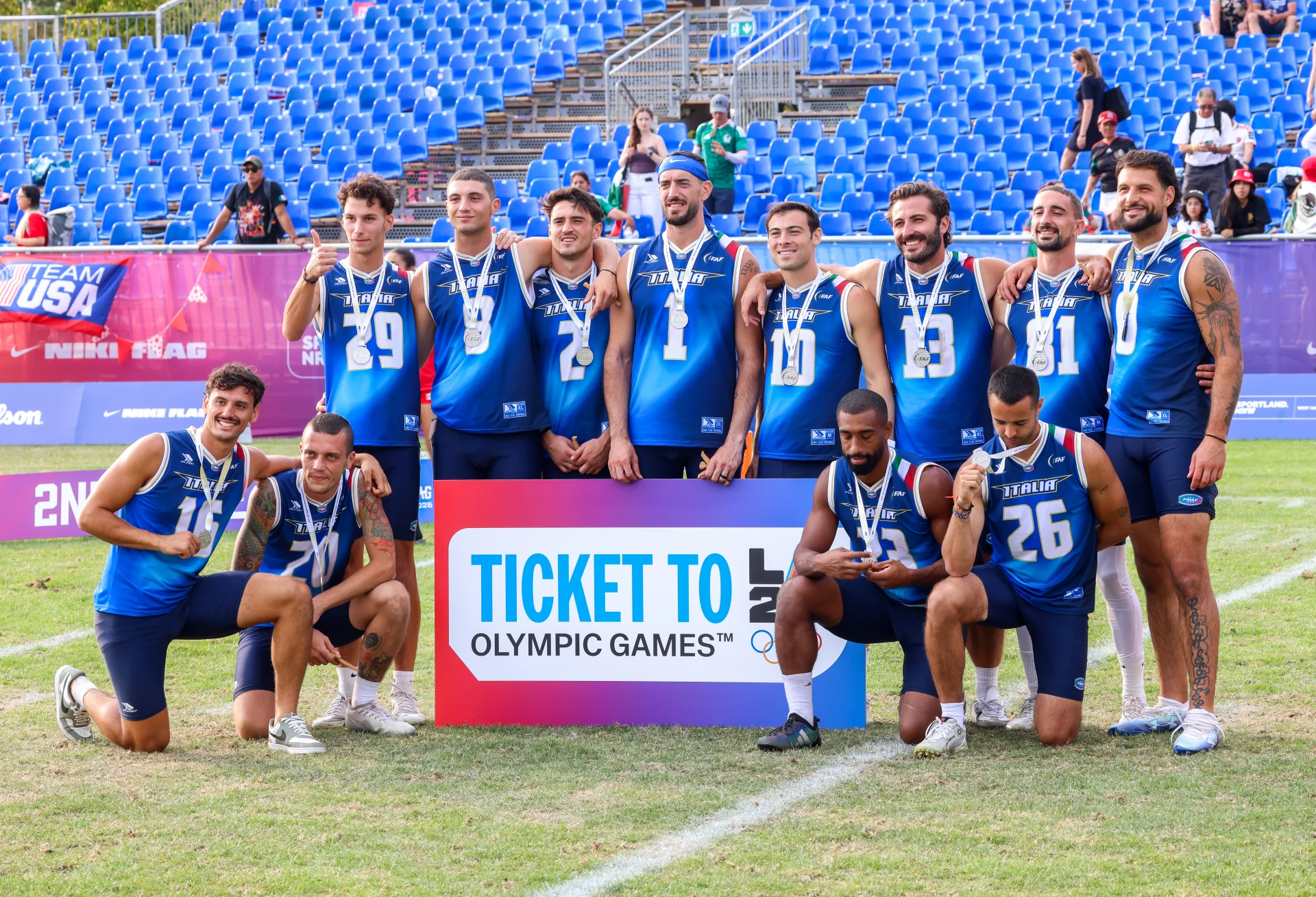
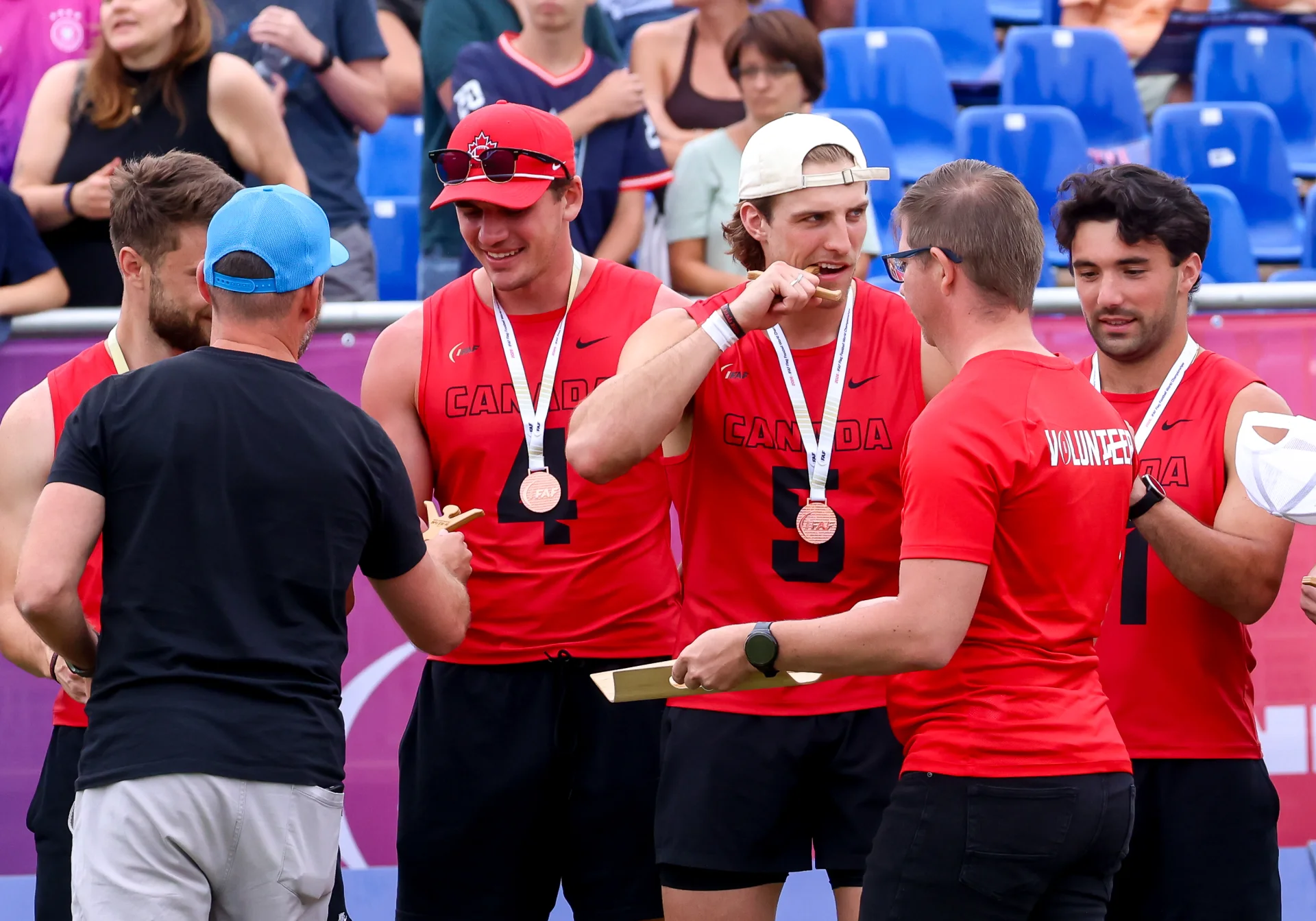
Congratulations to Canada, USA, Mexico Women and Italy Men on securing their Olympic spots.
But for us, the most interesting part starts now.
A World Championship is always about the results. Who won, who lost, who surprised and who went home disappointed.
But major tournaments also give us something else: a snapshot of where the sport is heading.
And after watching the best teams in the world compete in 2026, there are some pretty clear signals.
These are our seven lessons from WC26 - and seven things we believe will shape elite flag football on the road to LA28.
1. The best offense isn't necessarily built around one superstar
Make more players matter
Italy proved us wrong.
Luke Zahradka is a Top 3 QB in the world. We said it.
And even though we weren't convinced by Gerbino in flag before this tournament, he was excellent as a red-zone target and a reliable checkdown centre - despite not snapping before.
That says something about where the game is going.
Italy had the quarterback. They had the athletes. But perhaps more importantly, they found ways to make more players relevant.
The Italian defense showed plenty too. Fantin and Lattorracca looked like players with a future at this level. Petrilli had an excellent tournament, while the rest of the defensive core consistently contributed.
Blackburn, meanwhile, showed why he could become one of the best DBs in the world, alongside Australia's Wyatt Gardner.
Crazy for us to say that, we know.
But watch the best offenses in the world closely and the trend is becoming difficult to ignore.
The ball is moving.
The offense isn't necessarily asking one player to solve every problem.
That's becoming increasingly difficult to defend.
Italy's run also reinforced something that has been becoming clearer across international flag football: ball distribution matters.
You can still have a star.
In fact, you probably need one.
The defensive problem
But the teams that go deepest are increasingly the teams that can make four or five players matter in the same game.
And that is a problem for every defensive coordinator preparing for them.
2. Chemistry might be the hardest thing to measure - and one of the most important
Chemistry in action
American Samoa was one of the stories of the tournament.
The official statistics were not yet available as we finished this piece, but there is a strong possibility that American Samoa was the only team at WC26 not to turn the ball over.
Taulia Tagovailoa and Tai Tiedemann formed an excellent QB-WR combination.
Then there was Jahcour Brown, Peko, John Hardy - arguably the best flag puller of the tournament - former NFL player Alijah Holder and a defensive unit full of athletic ability.
All of that is impressive.
But it wasn't the athleticism that stood out most.
It was the chemistry.
We saw plenty of former D1 college athletes throughout the tournament. That level of physical ability is becoming less unusual in elite flag football.
What is much harder to replicate is the feeling that a group of players has spent enough time together to know what the other person is about to do.
The best teams seem to have it.
They communicate without thinking about it.
They recover from mistakes faster.
They trust the next player to do his job.
American Samoa looked like one of those teams.
The separator
And as the talent pool continues to grow, that could become one of the biggest separators of all.
Because when everybody is fast, strong and technically capable, the things that don't show up on a testing sheet start to matter more.
3. Nobody is unbeatable anymore
The hierarchy is shifting
For fourteen years, USA had not lost a game.
Then they did.
Japan came very close to doing it again, with Koduai Okumura looking like one of the players who could become a major name in the sport.
And it wasn't just Japan.
Nolan O'Leary, Valentin Ehrenfried, Ben Frohlich, Tanguy Lominot, Carter Campbell, Josh Leventhal, Wyatt Gardner and Justin McMullen were among the players who showed just how deep the international talent pool is becoming.
Japan then beat Canada comfortably.
Israel beat American Samoa.
Australia beat Israel.
Mexico lost to Canada.
The old hierarchy is becoming much less comfortable.
That doesn't mean the traditional powers have disappeared.
It means the number of teams capable of making them uncomfortable is growing.
And that changes preparation.
There is less room for an off game. Less room for assuming the matchup will go the way it did last time. Less room for relying on reputation.
The margin between a medal contender and an early exit is getting smaller.
Europe's opening
And nowhere will that be more obvious than Europe.
With only two Olympic places remaining for European teams, while another group of countries continue to fight for the Q-Series and WC28 pathway, next year's European Championship could be one of the most competitive tournaments we have seen.
4. Defense is becoming a thinking game
Build systems, not just athletes
Flag football will always reward speed.
It would be strange if it didn't.
But the tournament reinforced the feeling that speed is becoming the entry requirement rather than the final answer.
The best defensive players weren't simply the ones who could run fastest.
They understood where they needed to be.
They communicated.
They recognised formations.
They anticipated.
They trusted the player next to them.
They made fewer mistakes.
Panama showed how good an offense can become when every player understands the details.
The response from defenses was equally interesting.
The best units are starting to look less like collections of athletes and more like systems.
That is important because offense is becoming harder to stop.
As throwing windows get smaller and athletes become faster, defensive football becomes increasingly about discipline and understanding.
Discipline over speed
There is still plenty of room for the spectacular flag pull.
But at the highest level, the smartest defender might become just as valuable as the fastest one.
5. The sport is ready for better officiating tools
Where technology fits
The refereeing at WC26 was significantly better than what we saw at the Paris 2025 European Championship.
That is worth saying.
But the tournament also showed how much more difficult officiating becomes as the level of play increases.
Feet in or out.
Balls touching the ground in the end zone.
Close plays that happen at full speed.
Calls that can change the direction of an entire game.
At some point, we have to ask whether the technology and procedures around the sport need to catch up with the athletes playing it.
We think the game is ready for coaching challenges.
There is also the quarterback question.
A few rushing situations created more contact than the game probably wants, and the penalty structure doesn't always feel proportionate to the advantage created.
A 10-yard penalty and automatic first down is one thing.
On the 11-yard line, it can be something very different.
These might sound like small details.
Margins and procedures
They aren't.
As flag football becomes more competitive, the margins become smaller, and the details around those margins become more important.
6. The fastest player doesn't automatically make the best flag player
Beyond the 40-yard dash
One of the biggest lessons from the tournament might also be the simplest.
You don't build a winning program around 40-yard dash times.
And you don't necessarily build it around the biggest names.
Some players coming from tackle football will transition brilliantly.
Some won't.
Some athletes who look less spectacular on paper will become excellent flag football players because they understand spacing, timing, communication and decision-making.
That matters when selecting teams.
So does culture.
You don't leave your best players behind because they don't fit a particular idea of how the game should be played.
But players have responsibilities as well.
A team cannot build elite chemistry around people who train once a week while everyone else is putting in six sessions.
Talent gets you into the conversation.
It doesn't automatically make you part of an elite program.
Selection and commitment
The teams that eventually succeed at Olympic level will have to find a balance between athletic ability, football intelligence, personality, commitment and the ability to function within a group.
That is considerably harder than running a faster 40.
7. The next advantage will belong to the best programs
From players to programs
This might be the biggest change of all.
For a long time, conversations around flag football have focused heavily on players.
Who is the best quarterback?
Who is the fastest receiver?
Who is the best defensive back?
Who should be on the roster?
Those questions will remain.
But increasingly, the more interesting question is becoming: Which countries and clubs are building the best programs?
How often do they train?
How do they scout?
How much film do they watch?
What statistics are they tracking?
How do they develop quarterbacks?
How do they build chemistry?
How do they recruit?
How do they select players?
How do they create an environment where athletes improve rather than simply participate?
Everyone has the same 24 hours.
The difference is increasingly going to be what happens inside them.
Some programs will invest more.
Some will understand the game better.
Some will develop players better.
Some will create better environments.
Some will simply adapt faster.
And over the next two years, those differences could become enormous.
Only six teams will eventually prove they built a program good enough to win Olympic gold.
Everyone else will still be looking for the missing pieces.
That's completely normal.
Flag football is still developing.
There is no finished blueprint.
But WC26 gave us a pretty good idea of where the sport is heading.
The next Olympic cycle will be faster.
More tactical.
More professional.
More competitive.
And probably less predictable.
We think flag football is coming back to Brisbane.
But before we get there, there is an enormous amount still to figure out.
The next two years
WC26 is over.
The next chapter has already started.
Ready to hit the field?
Join our diverse roster. No experience needed to start training with us.
Join the teamFollow the Frogs on Instagram
Training clips, matchday moments, and the road to LA28 — join 10K+ followers keeping up with the team between games.
Follow @ljubljanafrogs_flagfootballKeep Exploring
Continue the story
Jump from this article into the roster, match center, and content hubs that give the story more context.
Content hub
News
See more reporting, analysis, and related stories from this track.
Open hubPlayer profile
Tevž Olovec
Move from the article into the player page, profile details, and season context.
Open profileLatest result
Bears vs Ljubljana Frogs — Domestic team
Open the result page for score context, then drill into the match center if needed.
Open result